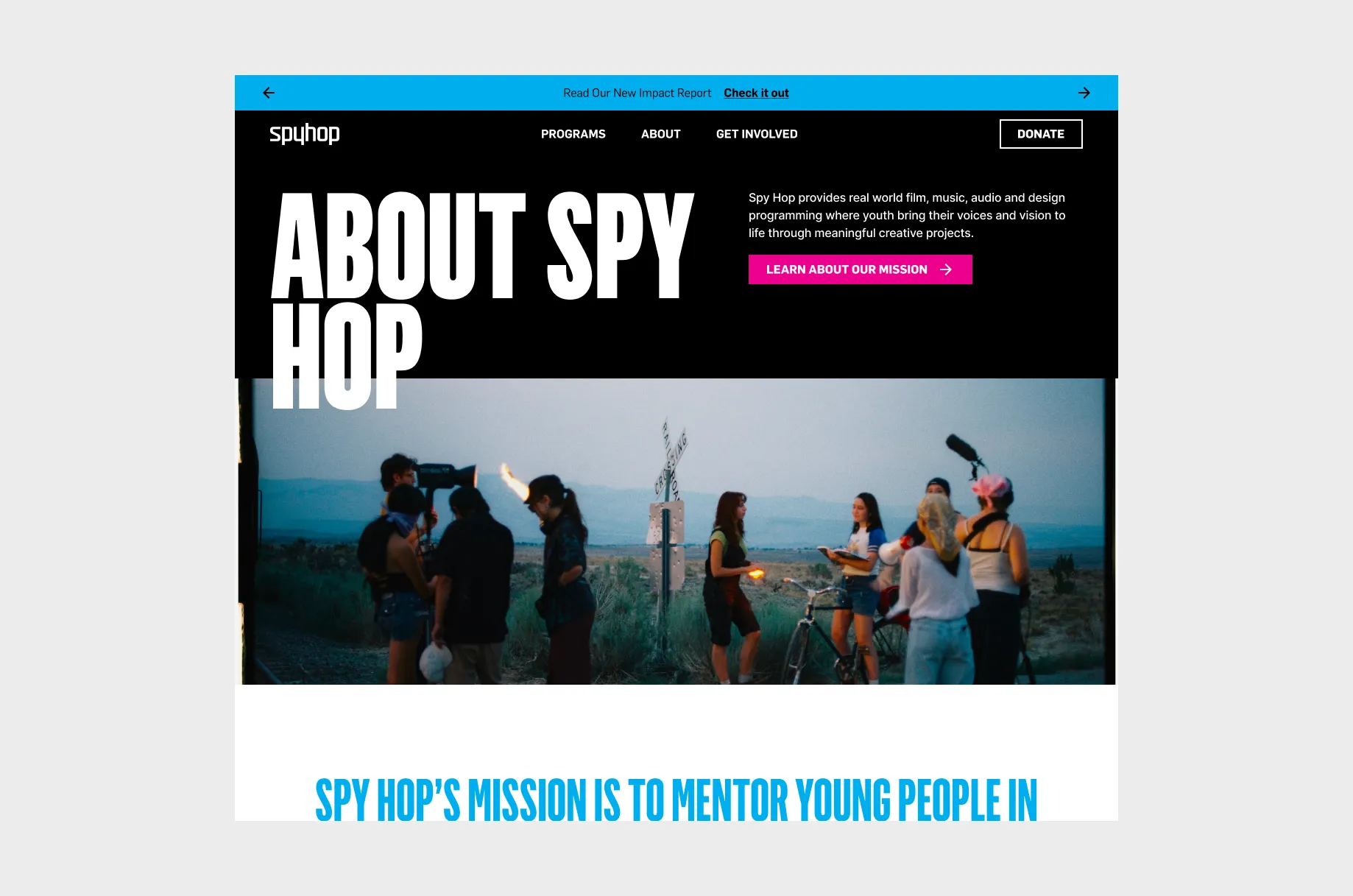
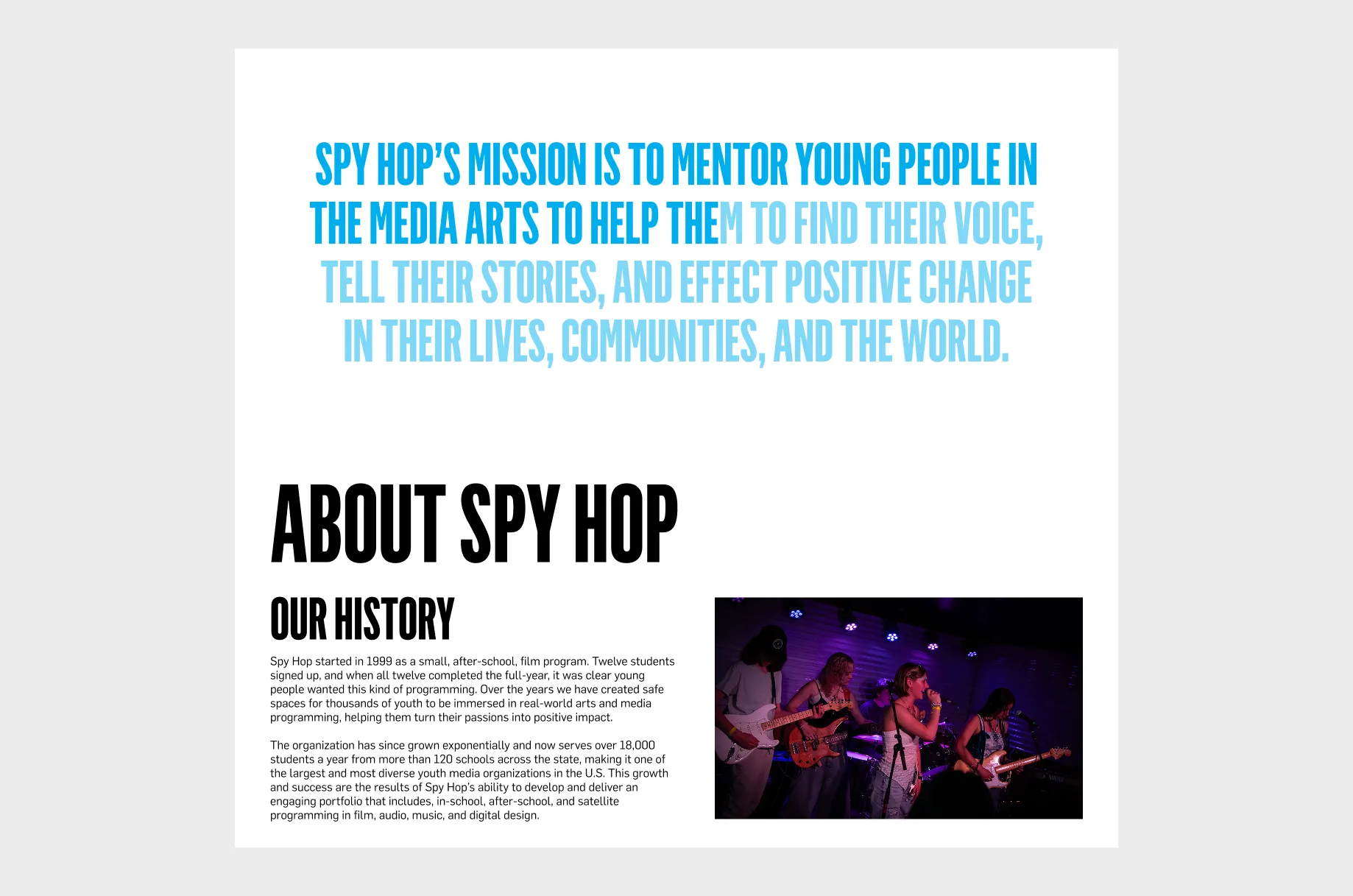
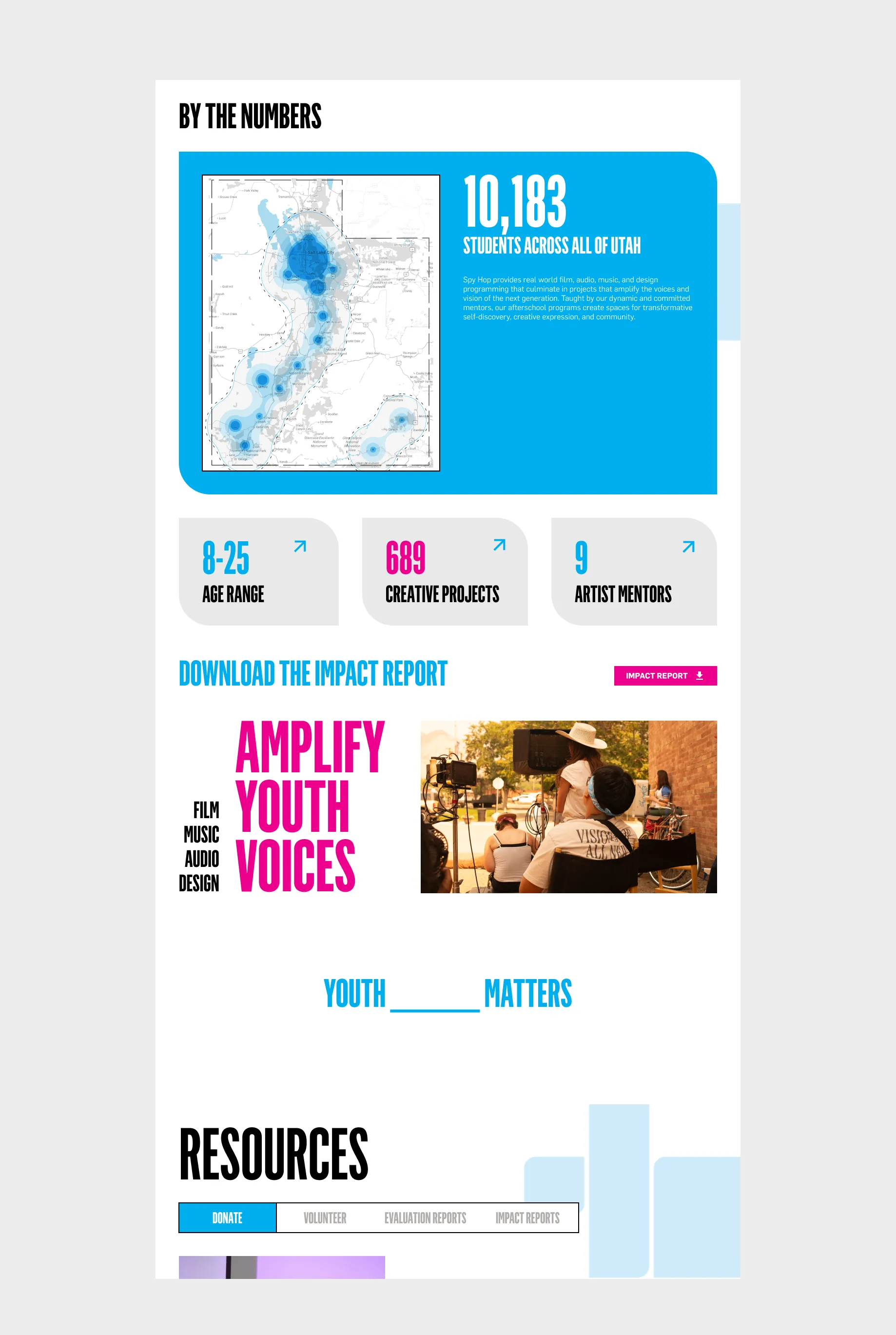
Spy Hop began in the late '90s as a simple experiment: hand a group of Salt Lake City teenagers cameras and let them tell their own stories. What started with 12 students documenting the turn of the century ended with a finished documentary that aired on HBO — and the start of a media arts program built around amplifying youth voice.
Challenge & Solution
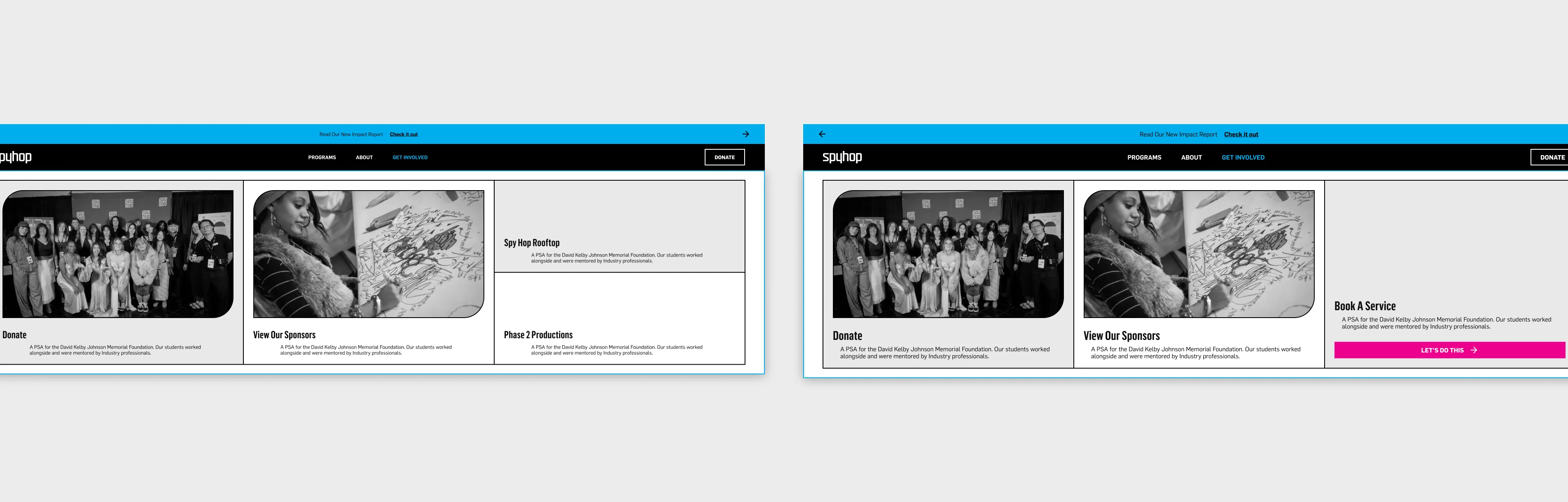
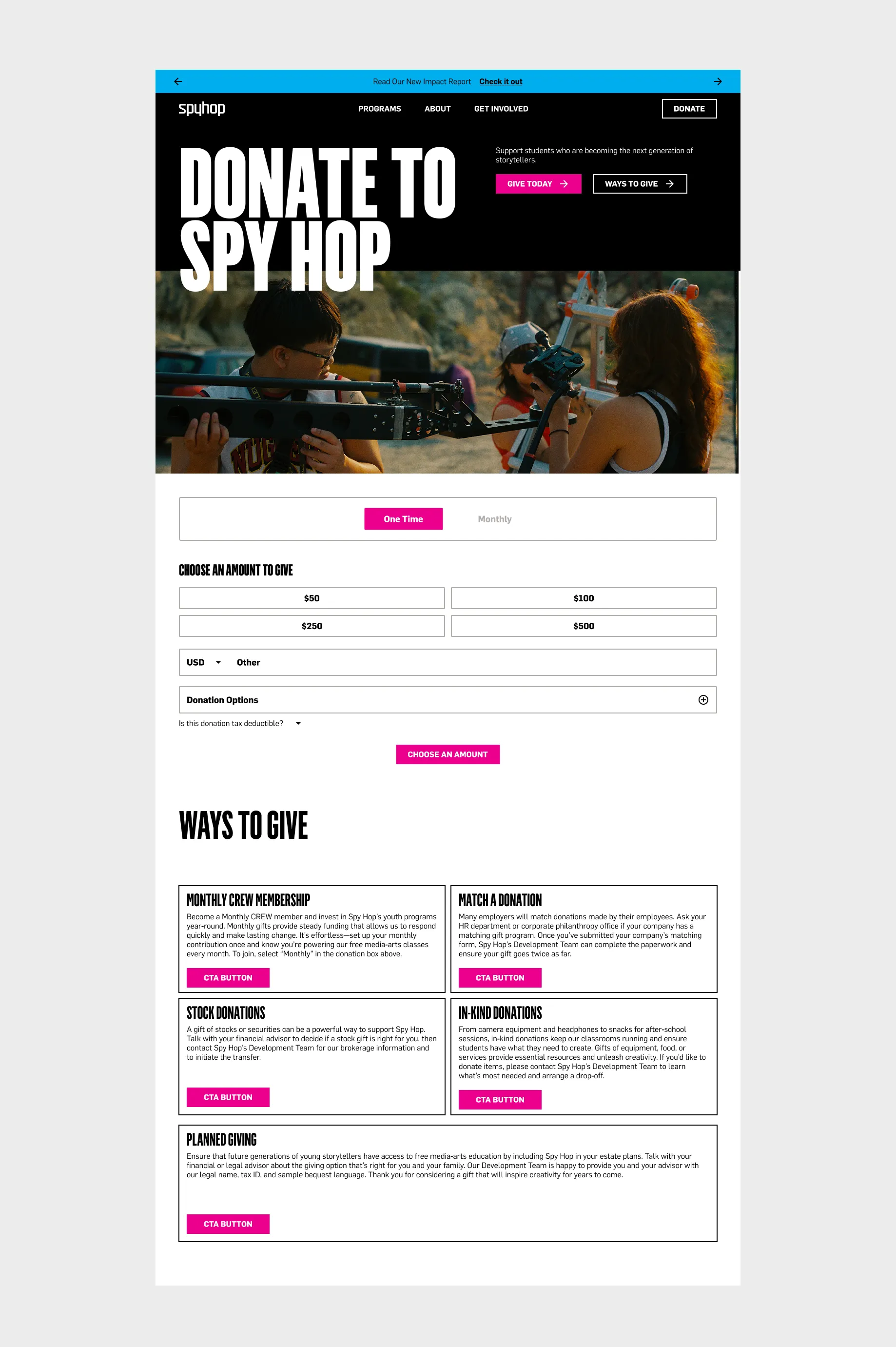
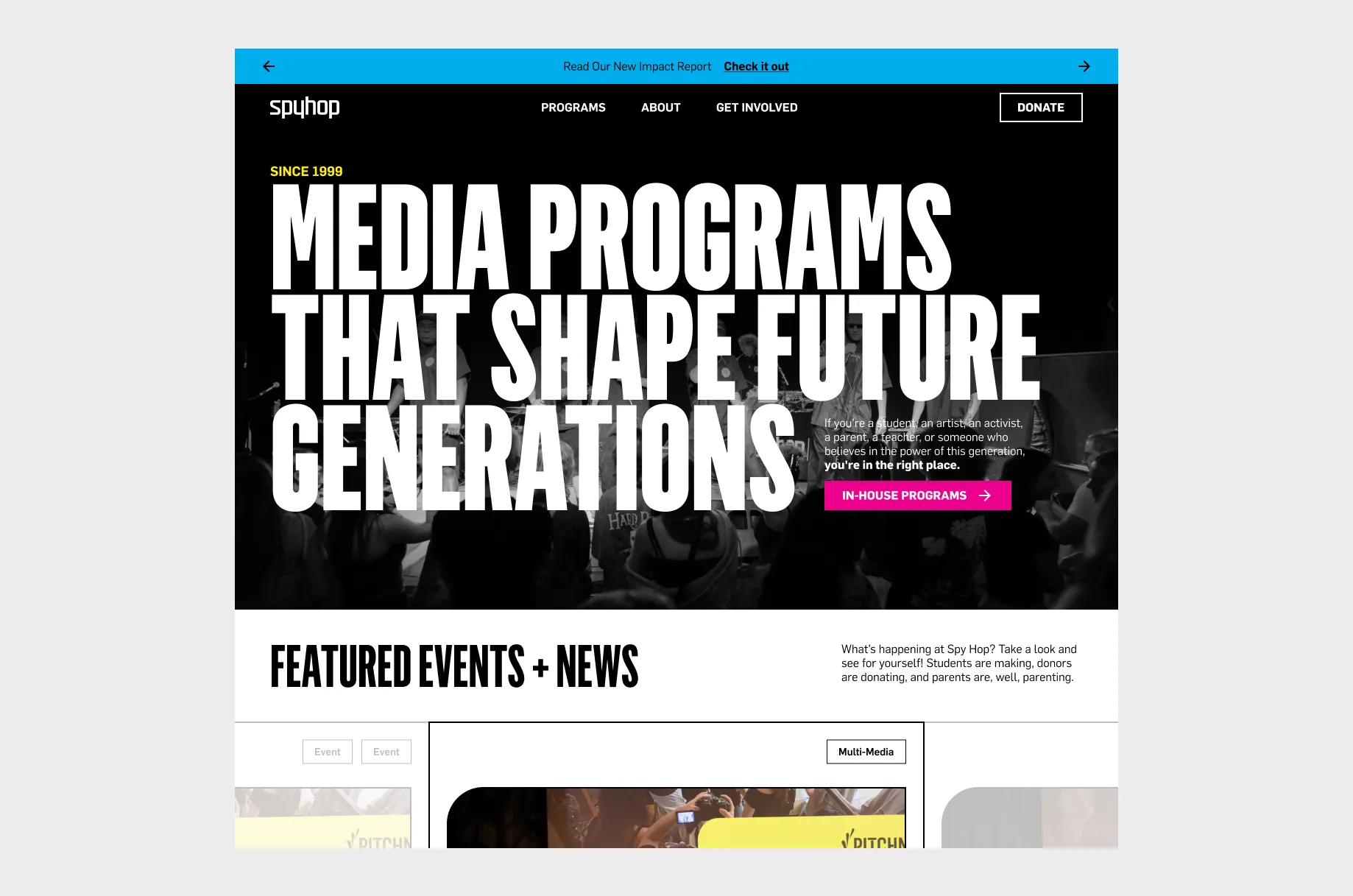
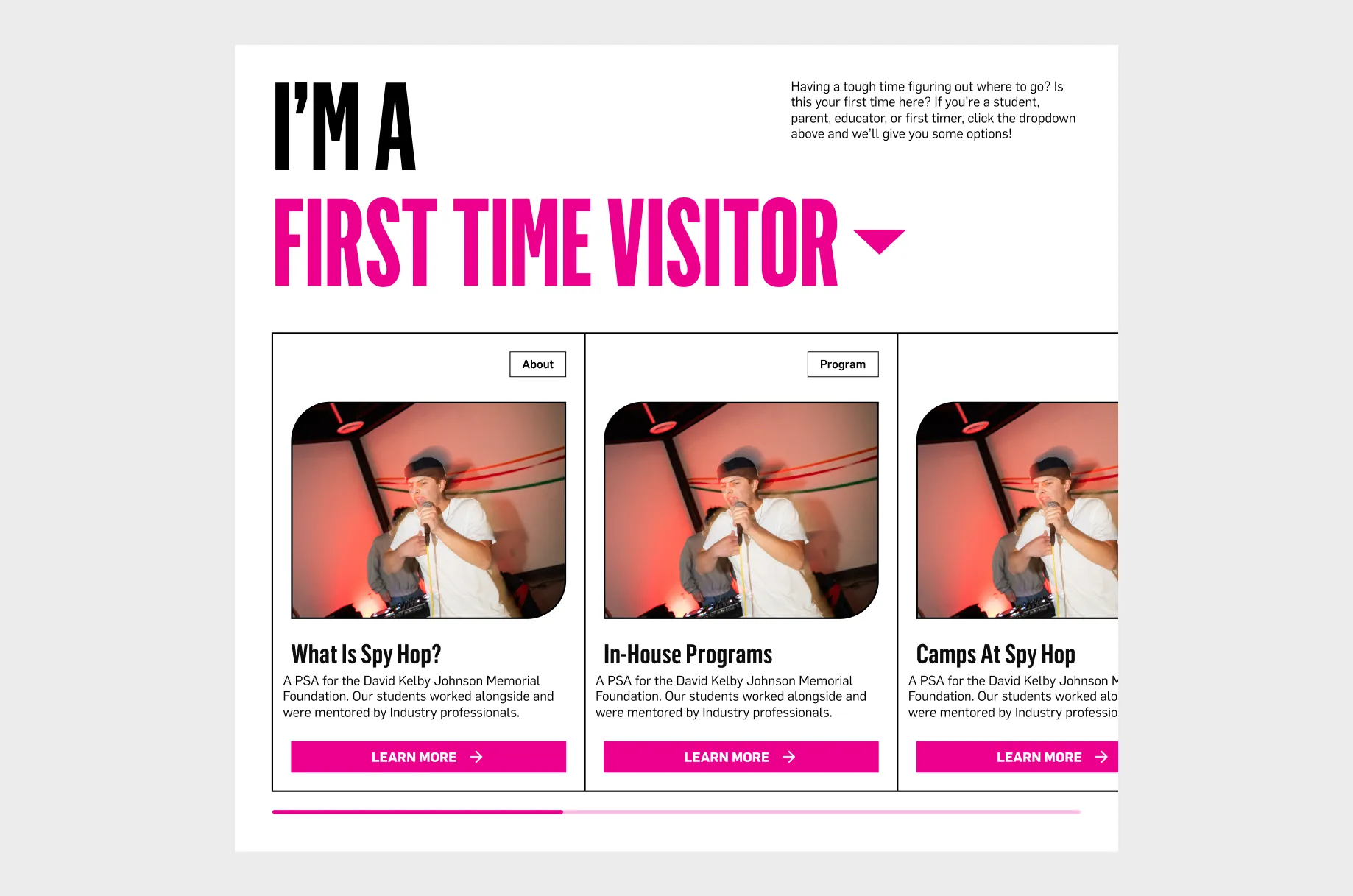
Spy Hop came to us with a sprawling 60+ page website and no real governance over what got added to it — every department published pages as they saw fit, and the site had outgrown itself. Working with a tight budget, a loose timeline, and a third-party dev team (Spy Hop had no in-house developers), I led UX research and information architecture and assisted with UI design to condense the site down to 13 total pages along with 1-2 templates that staff could expand on without the sprawl creeping back. The larger problem was Spy Hop's two sub-brands, the Rooftop Venue and Phase 2 Productions, which lived as isolated, disconnected sites even though they were technically part of the organization. Internal interviews turned up an even 50/50 split on whether staff even considered them part of Spy Hop, and market research into how other nonprofits structure earned-revenue arms showed most sold those services under the parent brand rather than spinning off separate sites. Combined with the reality that Spy Hop didn't have the staff to maintain two more standalone websites, the direction became clear: fold both brands into the main site as revenue-generating services that support Spy Hop's mission, rather than let them exist and eventually die on their own.